Content
A hydraulic hose that rolls off the shelf with the right fitting can still fail to fit once the machine is reassembled. The cause is rarely a bad crimp. More often, the hose was selected by outer diameter or by a thread size that looked familiar, while the inner diameter, the wall thickness, and the dash size on the layline were ignored. Hydraulic hose dimensions form a system: each number means something only when read together with the hose construction and the standard it is built to.
Three values define every hydraulic hose: inner diameter (ID), outer diameter (OD), and length. The ID determines flow capacity and is the reference point for dash size. The OD determines clearance and fitting compatibility, because fittings are designed around a specific hose OD from the same standard. Length is measured along the centerline, including any bends in the routing path.
Dash size is the shorthand used across the fluid power industry. Each dash number equals the inner diameter in sixteenths of an inch. A -4 hose has a 4/16 in (1/4 in) ID. A -6 hose has a 6/16 in (3/8 in) ID. The same logic extends upward: -8 means 1/2 in, -12 means 3/4 in, and -16 means 1 in. This convention applies to hoses and fittings alike, which is why a -6 fitting matches a -6 hose.
| Dash Size | Inner Diameter (in) | Inner Diameter (mm) | Common Applications |
|---|---|---|---|
| -4 | 1/4 | 6.4 | Pilot lines, small cylinders, pressure washer hose |
| -6 | 3/8 | 9.5 | General hydraulic supply and return lines |
| -8 | 1/2 | 12.7 | Medium-flow circuits, return lines |
| -10 | 5/8 | 15.9 | High-flow return, larger actuators |
| -12 | 3/4 | 19.0 | Main pressure lines on mid-size machinery |
| -16 | 1 | 25.4 | Large-bore cylinders, heavy equipment |
| -24 | 1-1/2 | 38.1 | Large industrial hydraulic systems |
A -4 line is the smallest common hydraulic hose in routine maintenance, while -6 and -8 cover most pressure lines on construction and agricultural equipment. Above -16, spiral-reinforced hoses dominate because braided layers cannot economically sustain the same pressure at that bore size.
If the hose is off the machine, direct measurement is the most accurate method. Measure the inner diameter with a caliper at the cut end, and compare that value with the dash chart. The outer diameter should also be measured with a caliper, but do not use OD alone to select a hose; the OD changes with the cover thickness and the number of reinforcement layers.
For hoses that are still installed, the layline is your best source of information. Most hydraulic hoses carry a printed specification that includes the standard, the dash size, and the working pressure. When the print has worn off, measure the thread of the fitting to infer the dash size: a -6 JIC fitting has a 9/16-18 thread, and a -8 fitting has a 3/4-16 thread. This gives you the connector size, which in most cases matches the hose ID.
Length is measured along the centerline of the hose, not as a straight line between fittings. If the hose is routed around a corner, follow the curved path. Add a small allowance for vibration and thermal movement, because a hose that is pulled taut at assembly will fail at the fitting long before its expected service life.
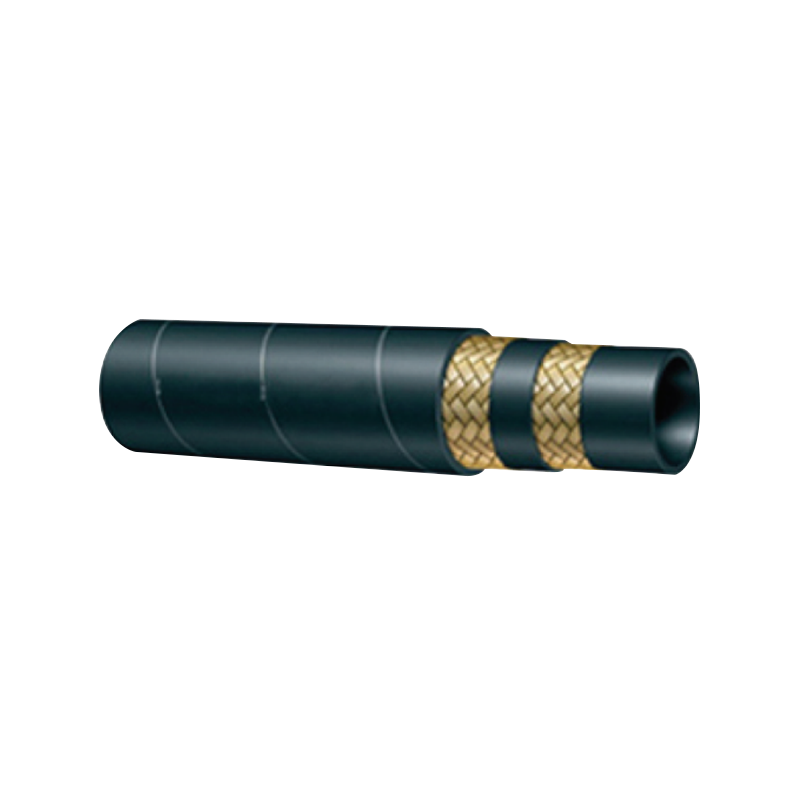
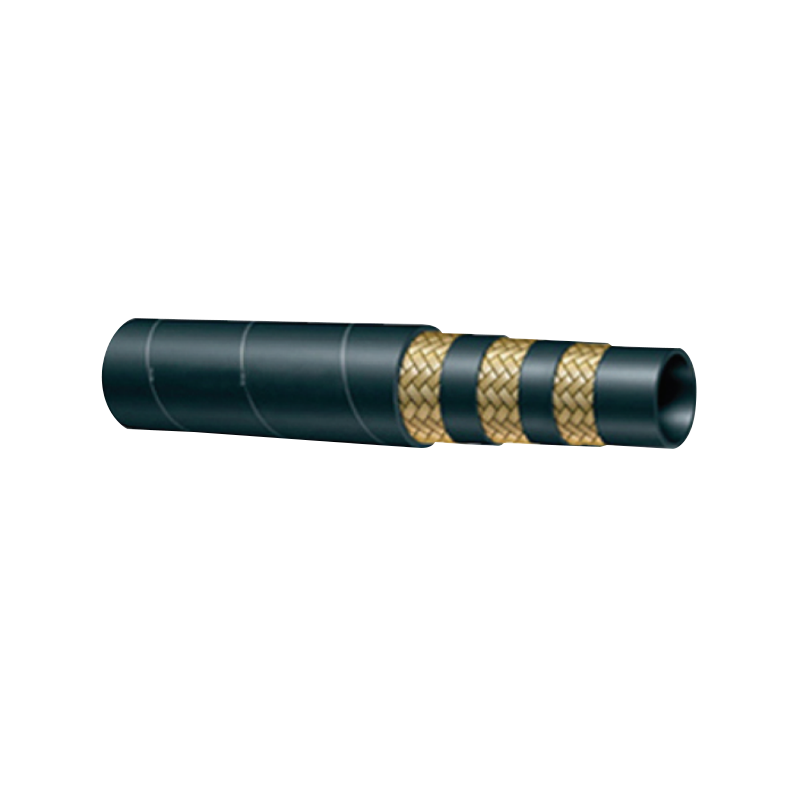
The reinforcement structure affects more than the pressure rating; it changes the dimensions that determine fit. Wire braided hoses such as SAE 100R1AT/1SN and SAE 100R2AT/2SN use one or two braided steel layers. They are flexible, have a relatively thin cover, and suit medium-pressure circuits that bend frequently. Their OD stays close to the fitting envelope, which makes routing in tight spaces easier.
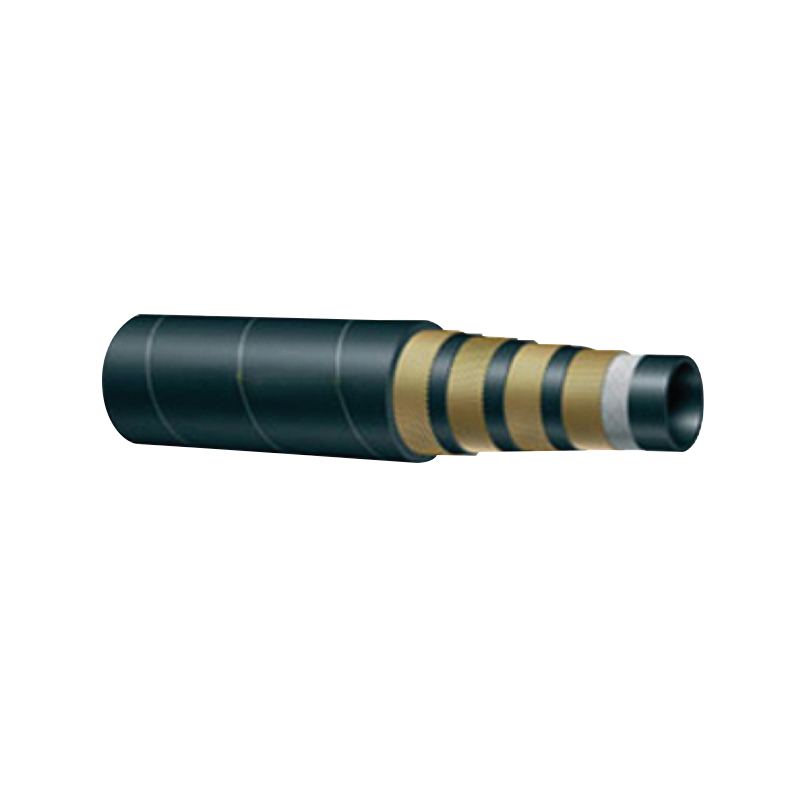
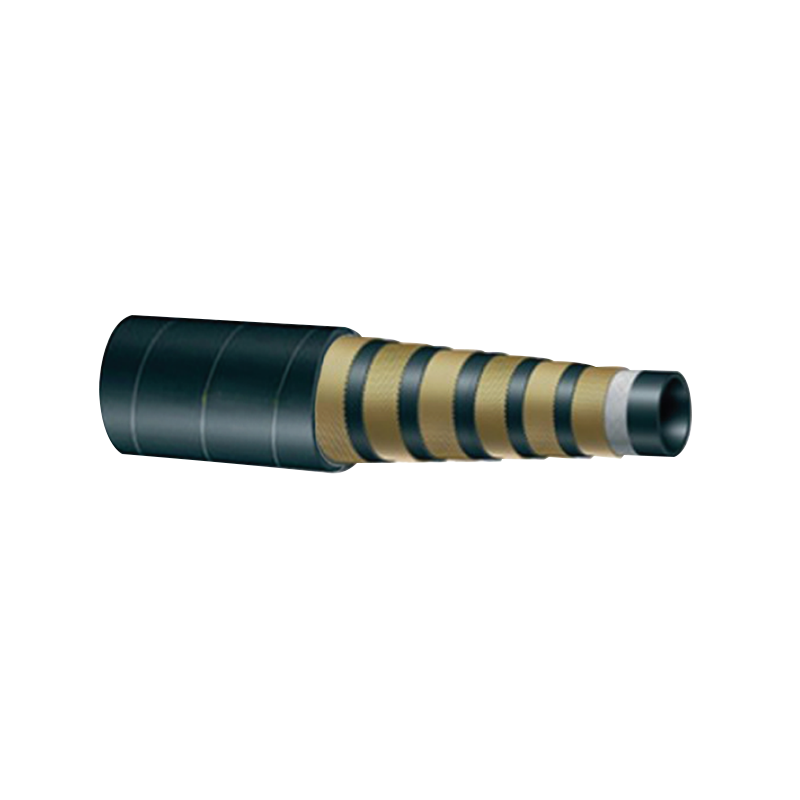
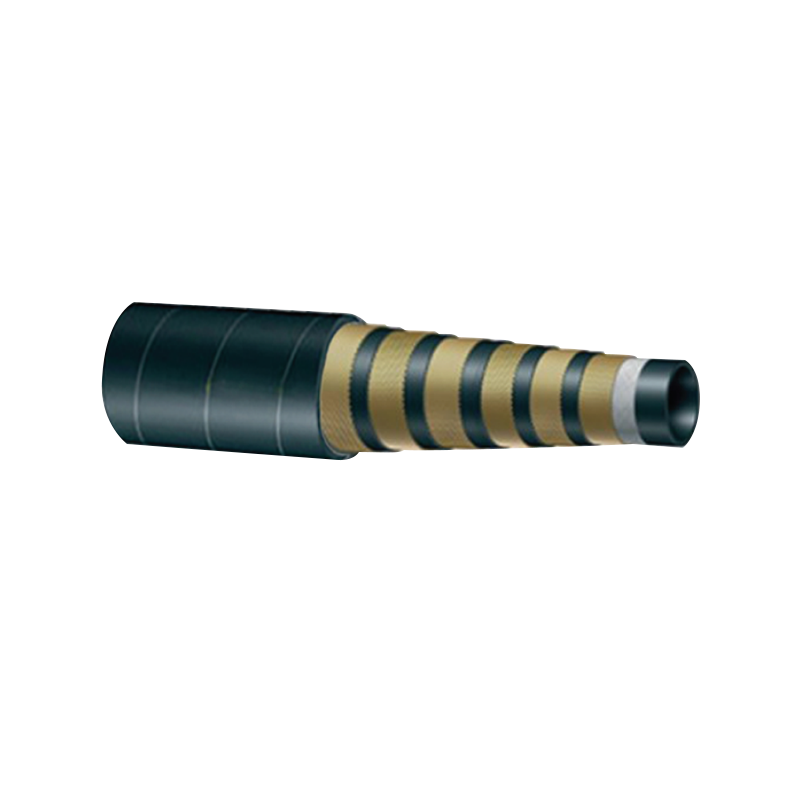
Spiral hoses such as EN856 4SH and SAE R13 use multiple helical steel wire layers. The added reinforcement delivers a higher working pressure than a braided hose at the same dash size, but the wall is thicker and the OD is larger. A -12 EN856 4SH hose has a noticeably larger outer diameter and stiffer bending behavior than a -12 SAE 100R2AT hose. If the machine was designed around braided hose clearance, a spiral replacement may not physically fit even when the dash size is identical.
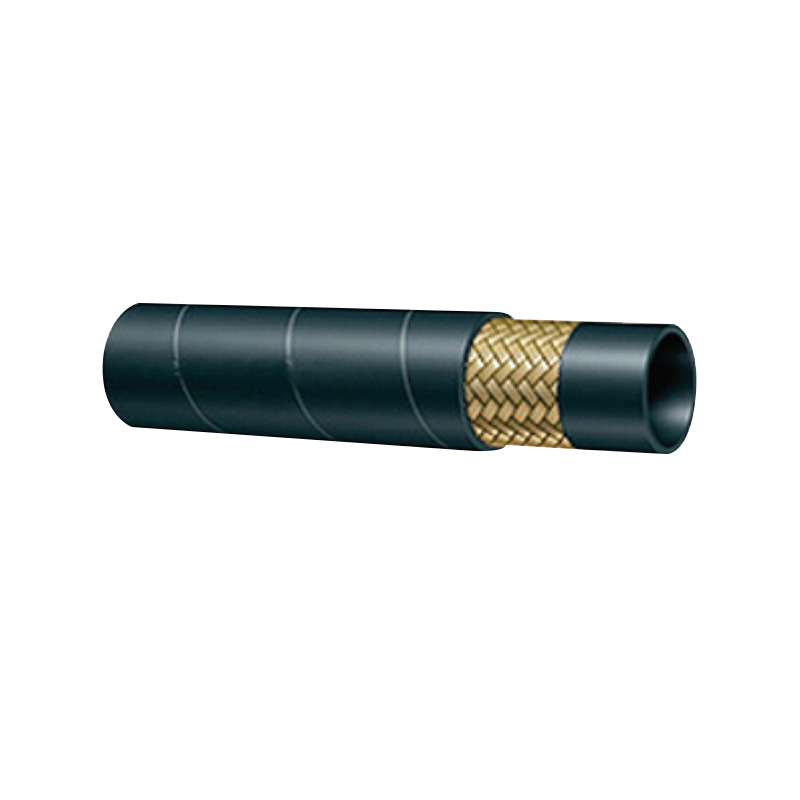
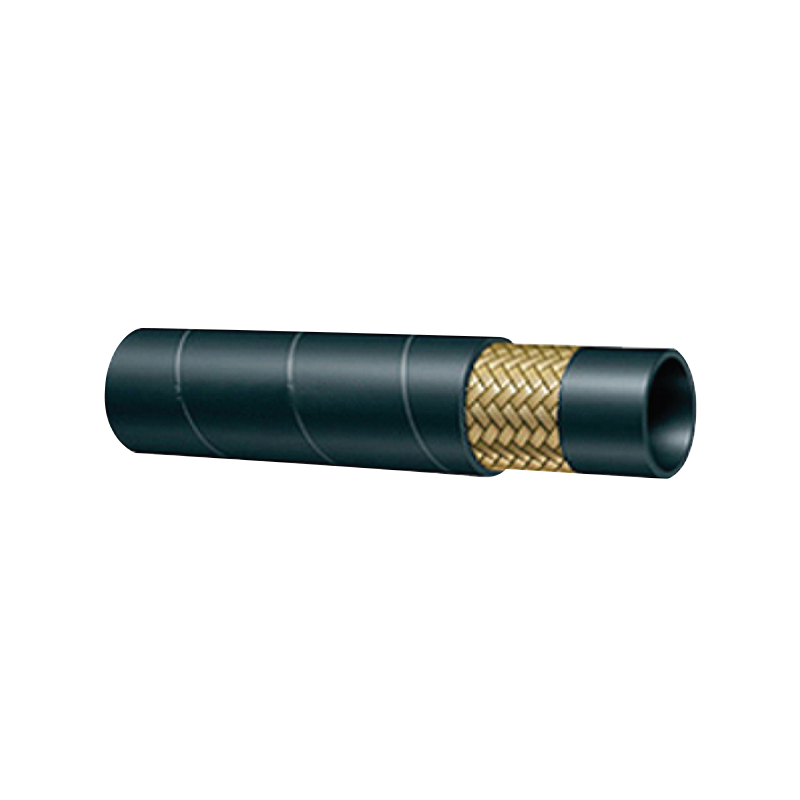
For general hydraulic circuits that need a reliable balance of flexibility and pressure capacity, the SAE 100R2AT/2SN double-layer steel wire braided rubber hose is the standard choice in many OEM and replacement applications.
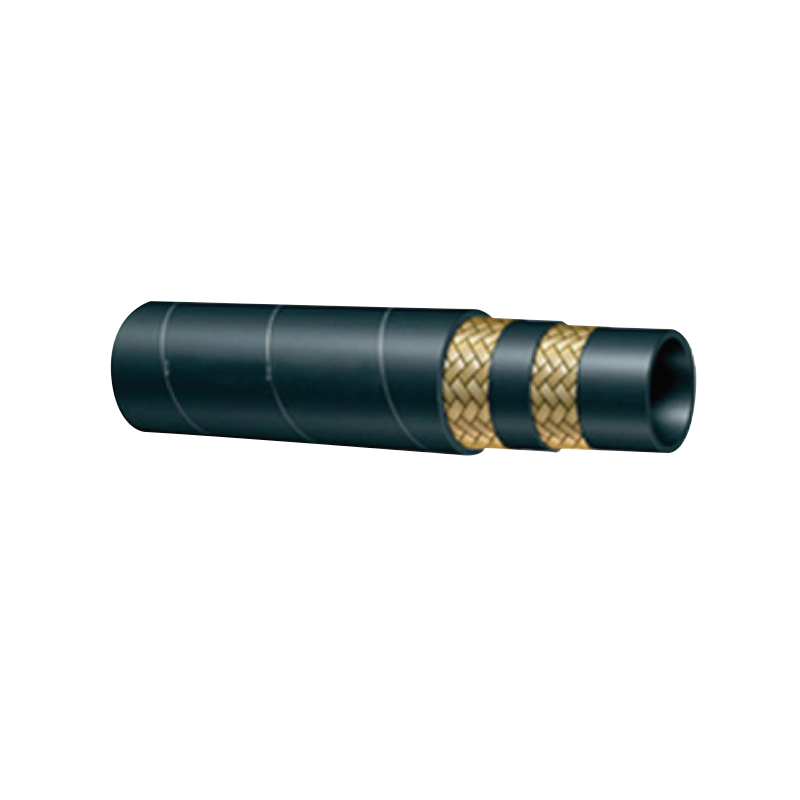 SAE 100R2AT/2SN Hydraulic Double-Layer Steel Wire Braided Rubber Hose Suppliers,Ningbo Shunlong Rubber Hose Co., Ltd. is China SAE 100R2AT/2SN Hydraulic Double-Layer Steel Wire Braided Rubber Hose Suppliers and OEM/OD...View Product →
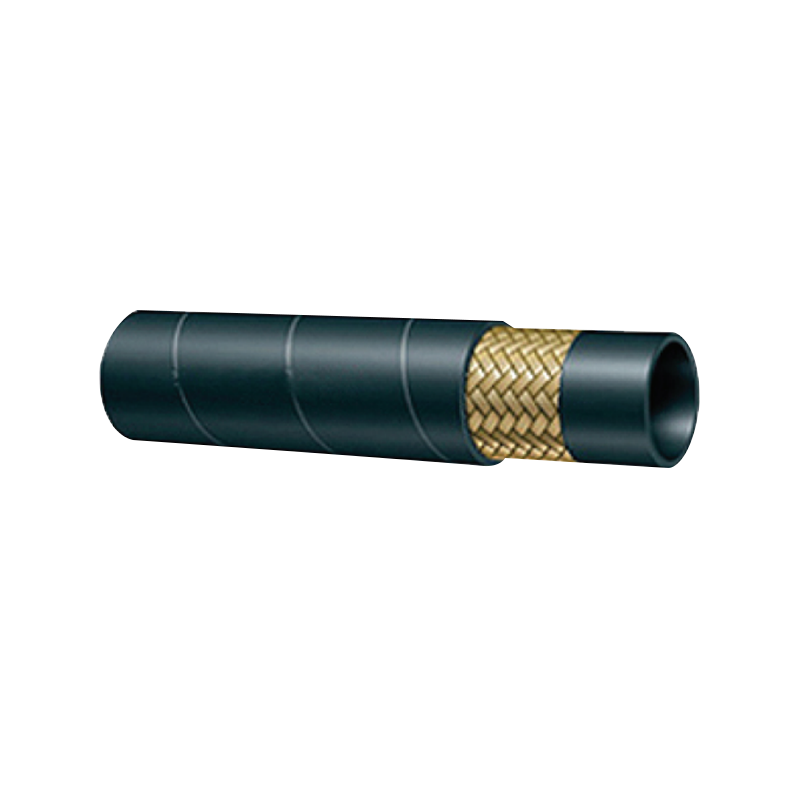
When a machine runs at higher impulse pressures or needs extra safety margin, the EN856 4SH industrial wear-resistant steel wire spiral hydraulic hose provides the thicker wall and higher burst strength that the braided construction cannot offer at the same dash size.
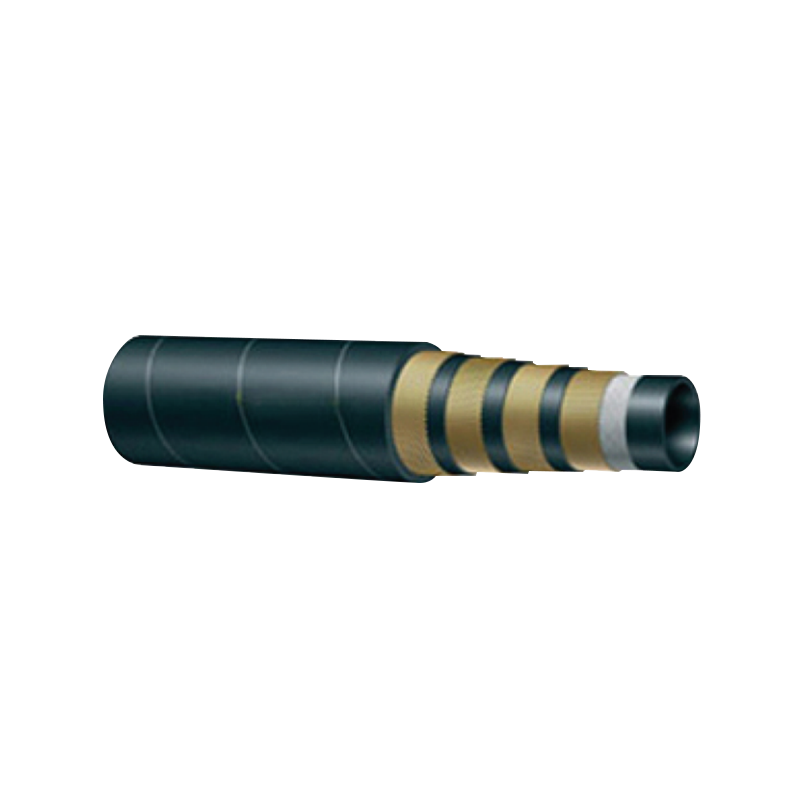 EN856 4SH Industrial Wear Resistance Steel Wire Hydraulic Spiral Hose Suppliers,Ningbo Shunlong Rubber Hose Co., Ltd. is China EN856 4SH Industrial Wear Resistance Steel Wire Hydraulic Spiral Hose Suppliers and OEM/OD...View Product →
Wall thickness determines the pressure capacity of a hose at a given ID, but it is not always listed in a dimension chart. The working pressure is defined by the standard, and the same dash size from two different standards can carry very different pressures. A -6 SAE 100R1AT hose is rated for a lower working pressure than a -6 EN856 4SP hose, and the outer diameter reflects that difference.
When you replace a hose, matching the standard is as important as matching the ID. If the machine specification calls for SAE 100R2AT and a hose is installed with the same dash size but a lower pressure class, the wall thickness may be inadequate for the system pressure. This is why the standard and dash size are printed on every layline, and why a hose with the correct ID and the correct length can still fail prematurely. We explain the engineering relationship in more detail in our article on pressure resistance and wall thickness of hydraulic oil pipes.
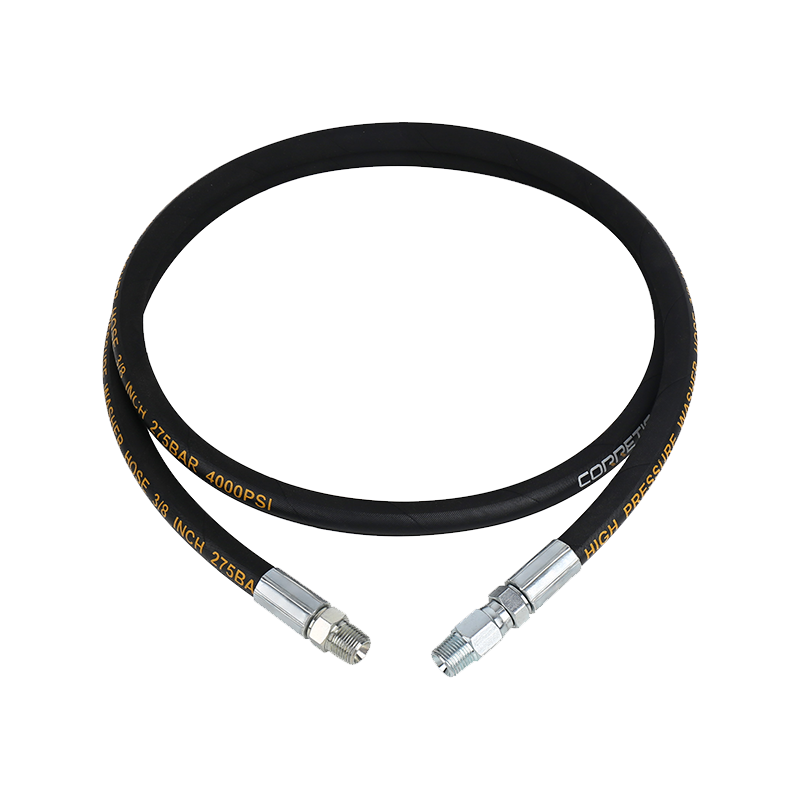
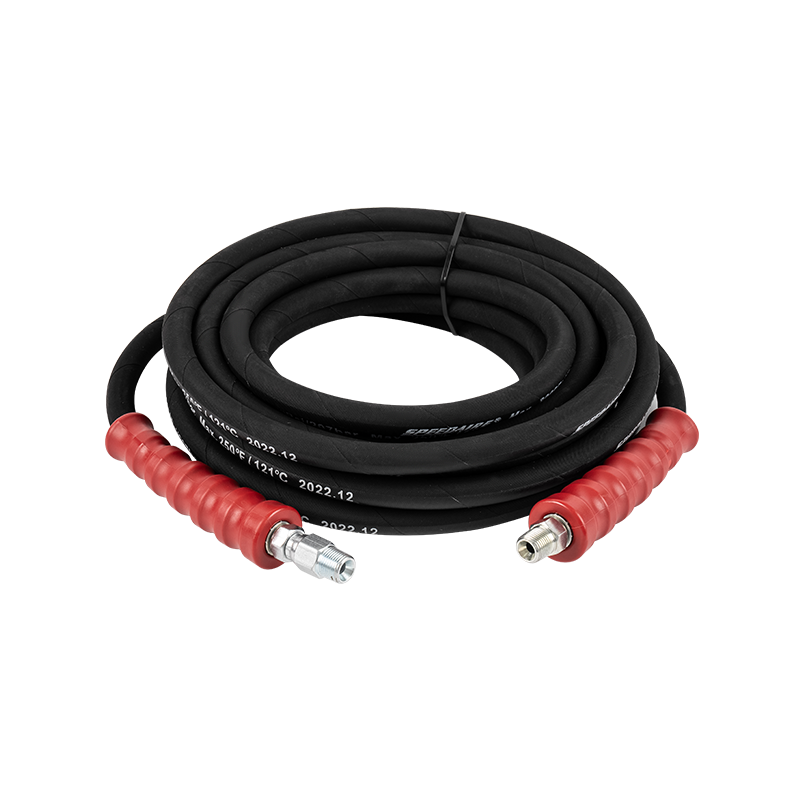
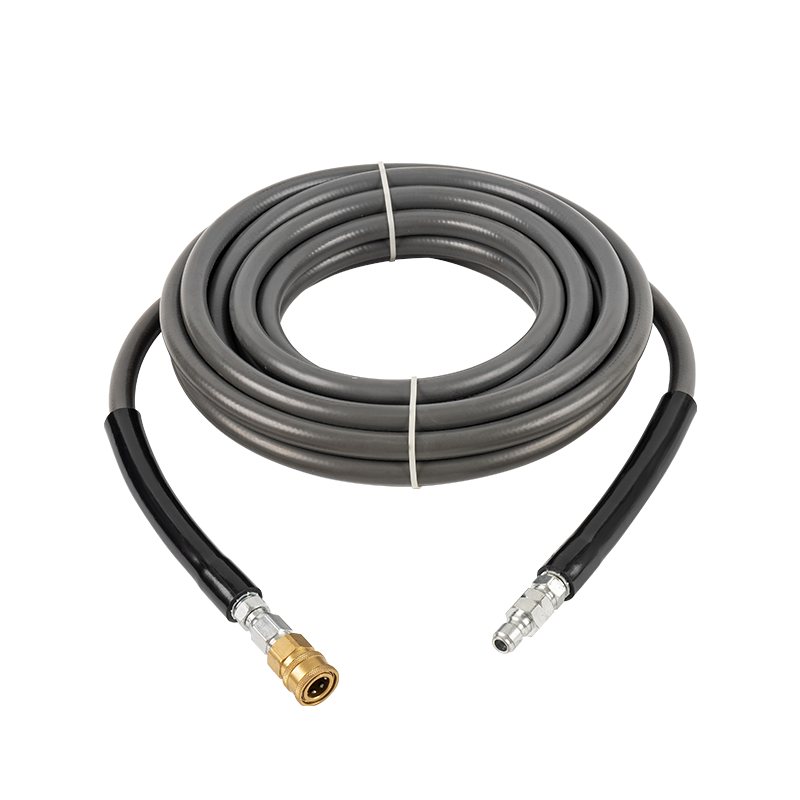
Pressure washer hoses follow the same dash size convention, but they operate in a lower pressure range than hydraulic transmission lines, typically from 1,500 to 6,000 psi. The inner diameter still controls water flow, and 1/4 in (-4) is the dominant size for residential and commercial washers. A 3/8 in (-6) hose appears on industrial units that need a higher flow rate to feed multiple nozzles or long wand extensions.
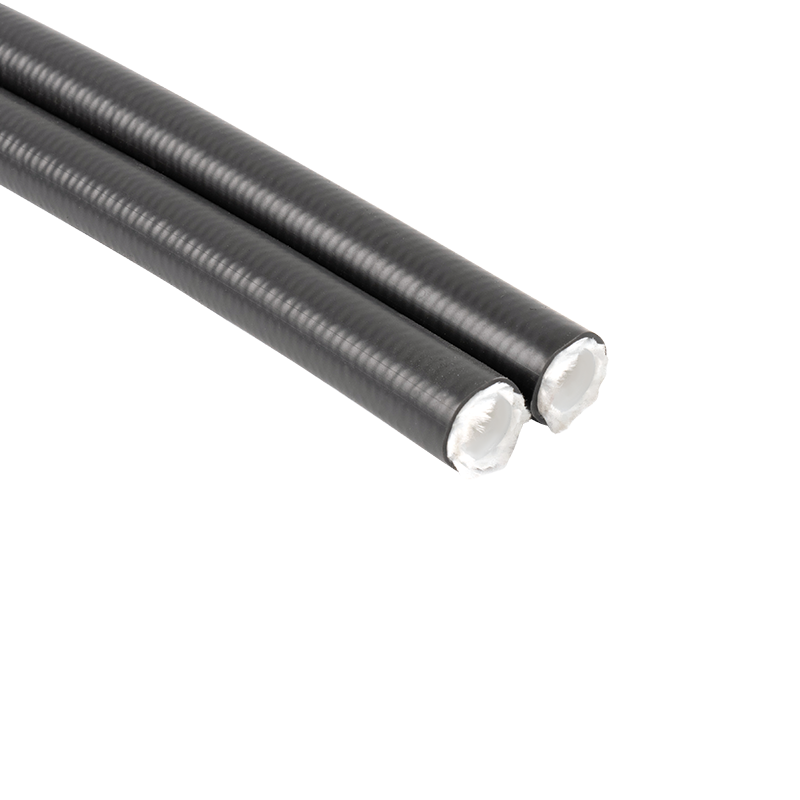
Material changes the OD and the handling characteristics even at the same dash size. A PE hose is lightweight and flexible for everyday cleaning tasks; a PVC hose adds color visibility and portability; a rubber hose with cloth braid withstands higher temperatures and greater abrasion but carries a larger OD for the same ID. For cleaning equipment that needs a compact, flexible connection at the standard 1/4 in bore, the 3000 psi flexible PE pressure washer hose is a practical option.
a@uze.png) Ningbo Shunlong Rubber Hose Co., Ltd. is China 3000 PSI 1/4View Product →
A few recurring mistakes explain most dimension-related hose failures in the field:
Every one of these errors produces the same outcome: a hose that is dimensionally close but functionally wrong. If you are not certain about a replacement, measure the ID, check the layline, and confirm the standard before ordering.
Hydraulic hose dimensions become simple once you separate the numbers that matter. The dash size tells you the flow potential. The outer diameter tells you whether the hose fits the space and the fitting. The wall thickness and the reinforcement layers tell you whether it survives the pressure. When all three are correct, the hose is typically a drop-in replacement. When one is wrong, nothing else matters. That is the standard we apply as a rubber hose manufacturer serving hydraulic systems and cleaning equipment across international markets.

 Wholesale High Pressure Power Washer Hose Manufacturers




 English
 Deutsch
 中文简体

a@uze.png "3000 PSI 1/4' Flexible PE Pressure Washer Hose")