Content
A hydraulic hose failure on an excavator or a pressure washer that suddenly loses pressure costs more than a replacement part. It stops a job. In my experience, most of these failures can be traced back to the manufacturing process, not to the fitting or the installation. The way a hose is compounded, extruded, reinforced, and vulcanized determines how long it will survive pressure spikes, flexing, and temperature extremes. Understanding the hose manufacturing process is therefore a buying skill, not just a technical topic.
Every performance spec on a hose datasheet, from burst pressure to bend radius and temperature range, is set during manufacturing. A hose is not a single piece of rubber. It is a composite of an inner tube, a reinforcement layer, and an outer cover. Each layer has a job, and the process bonds them together so that the finished product can survive real-world use.
The overall process follows four stages. Keeping these stages in mind helps you read a manufacturer's capability.
Then final testing and packaging lock in the quality.
The starting point is the rubber compound. For hydraulic hoses, the inner tube needs to resist oil, high temperatures, and fluid compatibility. A petroleum-based hydraulic fluid can attack a poorly formulated tube. The standard is usually NBR nitrile rubber, but the compound recipe, including plasticizers, fillers, and curing agents, determines hardness, flexibility, and temperature rating.
Reinforcement uses high-tensile steel wire. The wire is not ordinary steel. It must have a consistent diameter and surface finish because irregular wire creates weak points under pressure. For higher-pressure hoses, multiple layers of wire are braided or spiraled. Some hoses use fabric or synthetic fiber, but steel wire remains common for hydraulic systems.
The outer cover must resist weather, abrasion, and ozone. A weather-resistant rubber or polyurethane can make the difference between a hose that lasts five years and one that cracks in a year.
Extrusion is the step that forms the smooth, continuous inner tube. Rubber compound is fed into an extruder, where a screw pushes it through a die. The die controls the inner diameter and wall thickness. This may sound simple, but consistency is the hard part. A wall thickness that varies by even 0.5 mm can create a high-stress zone where the hose eventually bursts.
Good manufacturers measure wall thickness and control the temperature of the rubber during extrusion. Some also use an air stream inside the tube to hold a smooth surface and prevent sagging. The inner tube must be free of air bubbles, pits, and contaminants, because those imperfections become failure points once the hose is under pressure.
For many hydraulic applications, the reinforcement layer is a braid of steel wire. Braiding machines wrap the steel wire around the inner tube at a precise angle. The braid angle is critical. If the angle is too high or too low, the hose will not hold pressure evenly, and it may twist or extend when pressurized.
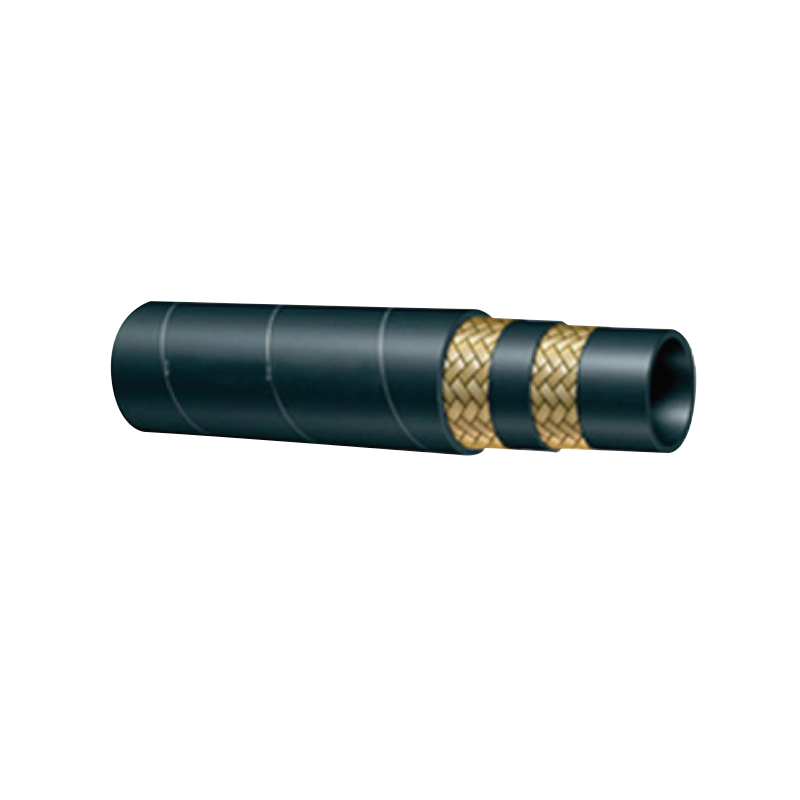
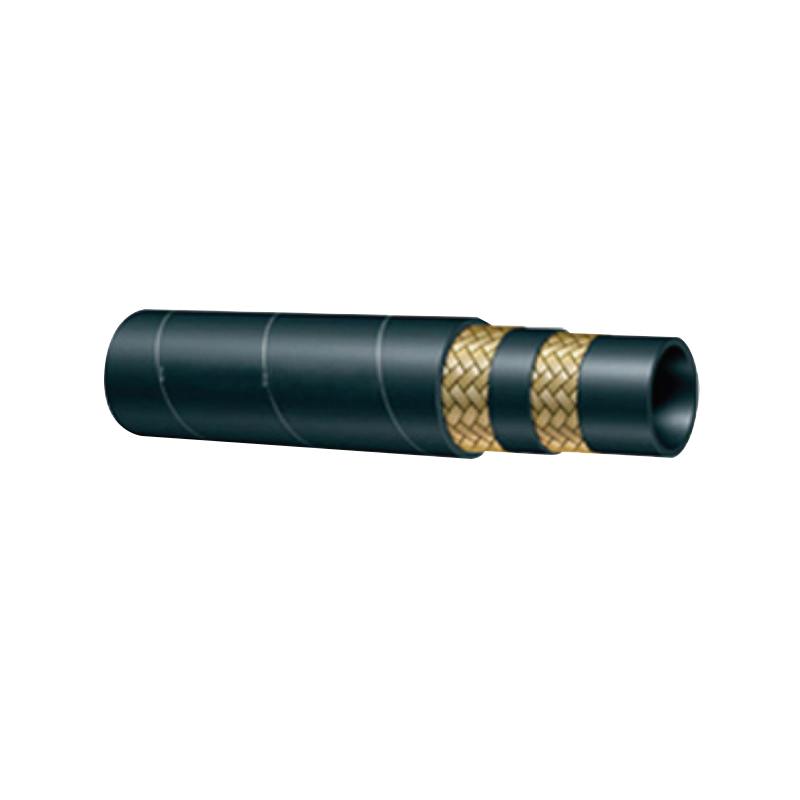
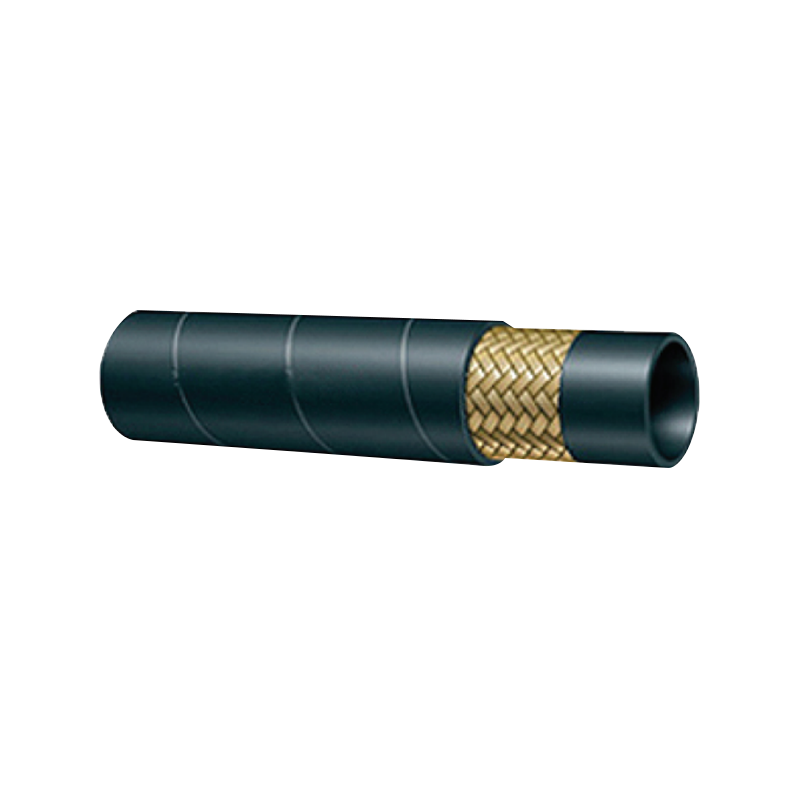
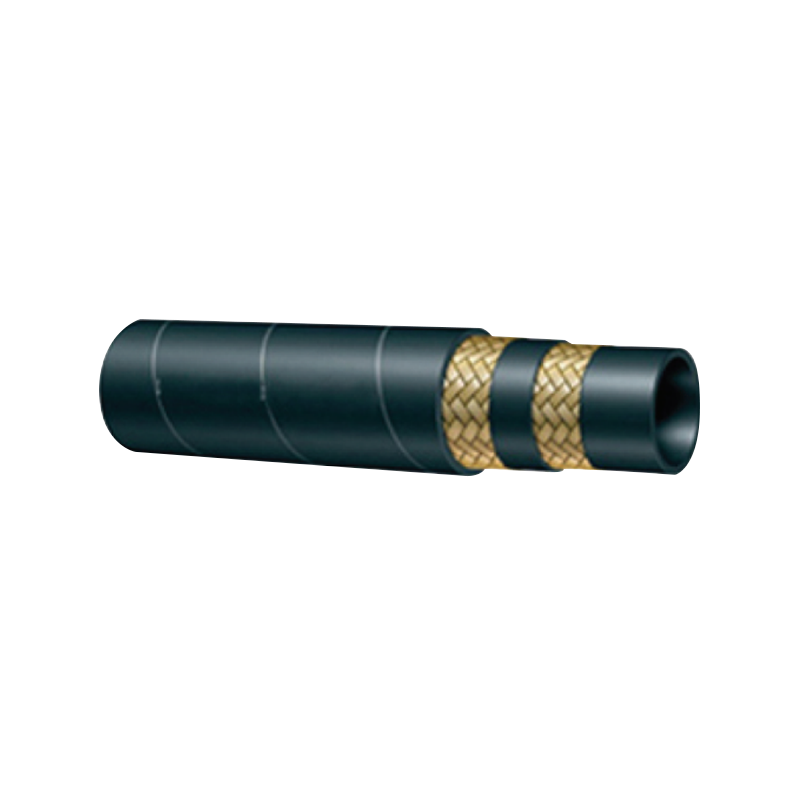
Double-layer braided hoses are common for medium-pressure systems. Standards such as SAE 100R1AT and EN857 1SC describe single-layer braided hoses for lower pressure, while SAE 100R2AT and EN857 2SC use two layers for higher pressure. The braiding step also sets the hose's outside diameter, which matters for fitting selection.
When you source a braided hydraulic hose, ask about the braid angle tolerance and the wire tension control. Inconsistent tension can lead to a wavy reinforcement that creates leaks and premature failure.
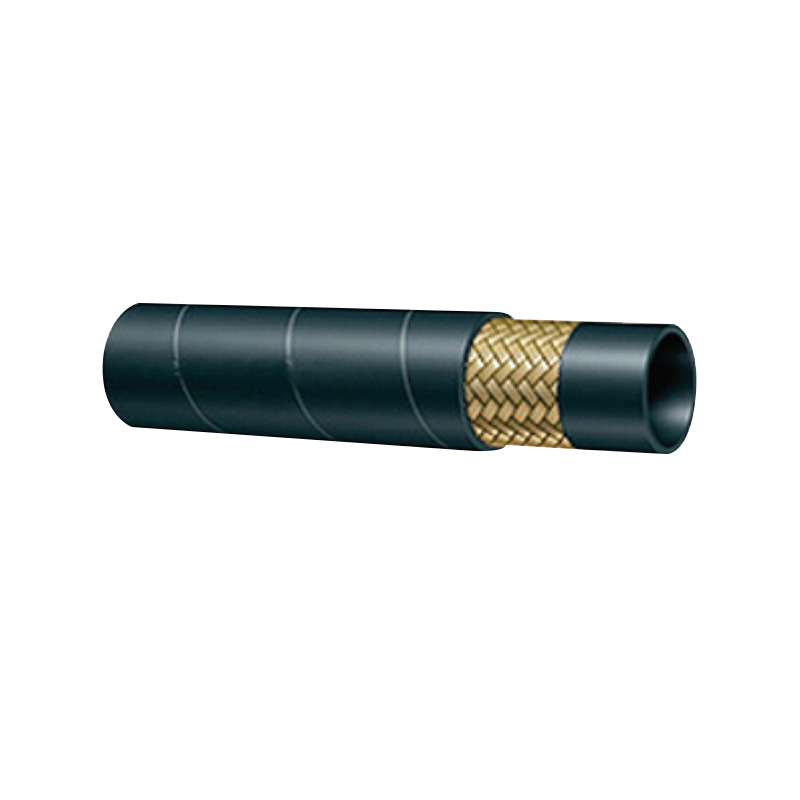 SAE 100R1AT/1SN Single Layer Steel Wire Braided Rubber HoseExplore this single-layer steel wire braided rubber hose for reliable hydraulic performance in demanding industrial and agricultural environments.View Product →
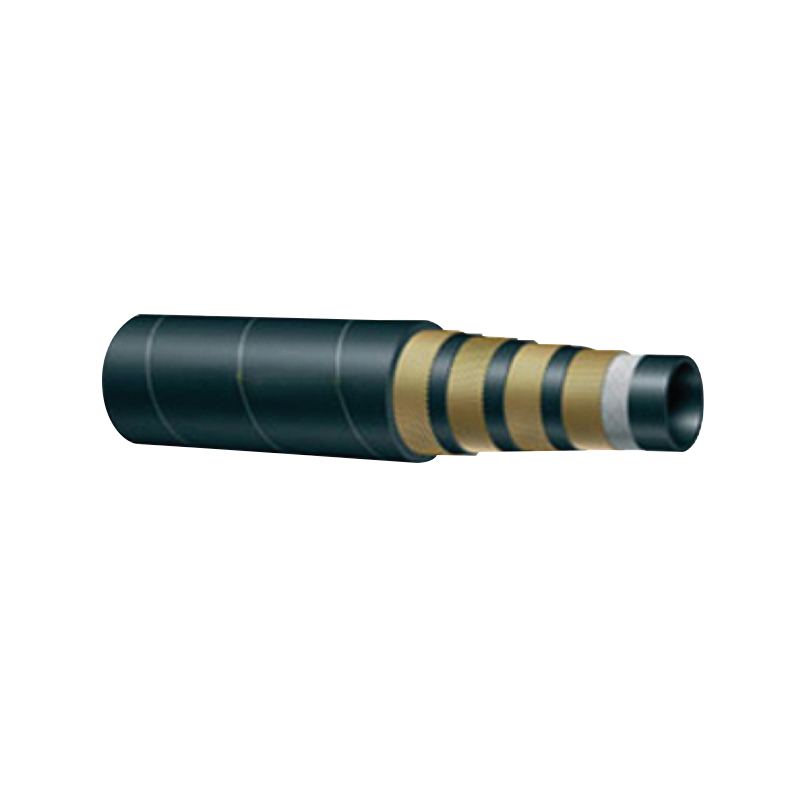
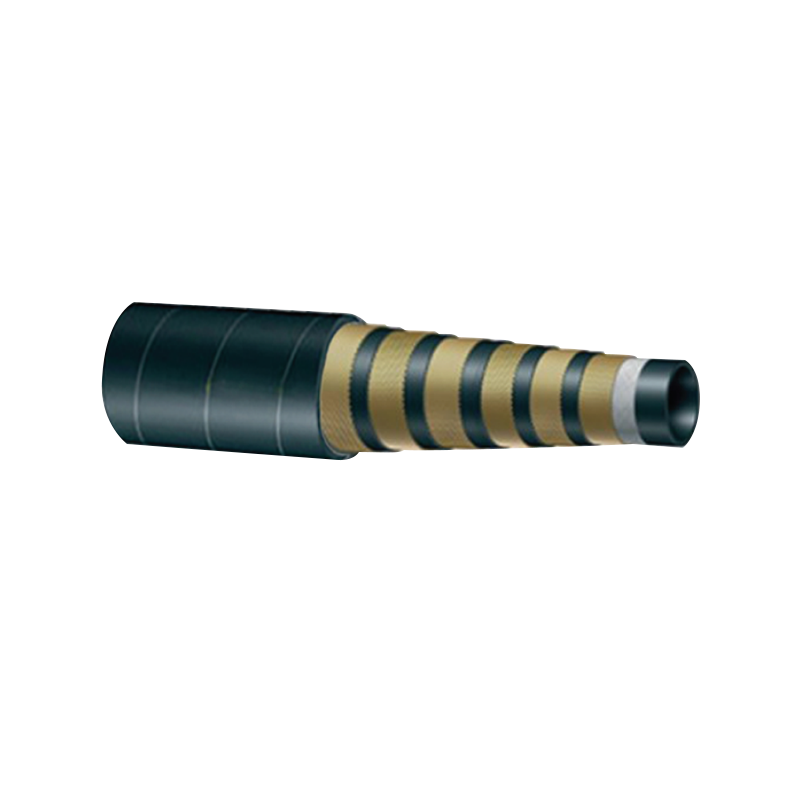
As pressure ratings climb, manufacturers switch from braiding to spiraling. In a spiral hose, steel wire is wound around the inner tube in layers, usually with multiple wire strands in each layer. The winding direction alternates between layers to balance torque and prevent twisting under pressure.
Spiral hoses are used for ultra-high-pressure systems. Standards like EN856 4SH and SAE R15 define construction for four or six spiral layers. The spiral structure gives a higher burst pressure and better performance in demanding impulse cycles. It also changes the bend radius. Spiral hoses are typically stiffer, so you need to plan the routing carefully.
For equipment that sees heavy hydraulic shock, such as excavators, the spiral reinforcement matters more than the outer cover. Manufacturers pay close attention to wire tension and layer count because a missed layer or a loose spiral can cause a catastrophic failure at 10,000 psi.
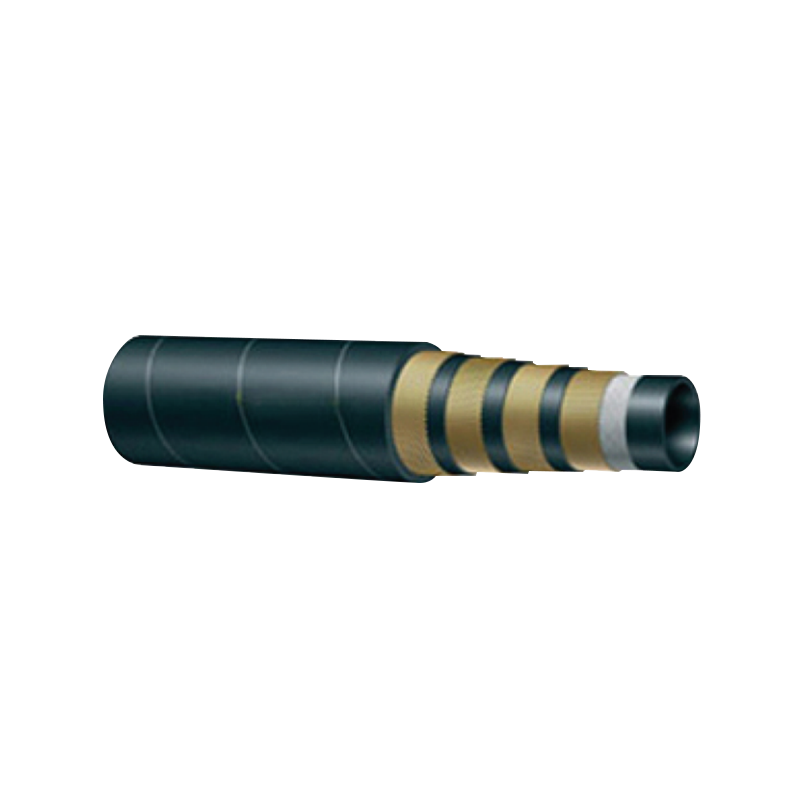 EN856 4SH Industrial Wear Resistance Steel Wire Hydraulic Spiral HoseThis spiral hose offers high pressure resistance and wear durability, making it a dependable choice for heavy-duty machinery and equipment.View Product →
After the reinforcement layer is applied, the hose receives an outer cover. This layer protects the wires from abrasion, chemicals, and weather. The cover is extruded over the reinforcement at a controlled temperature. Then the entire hose moves into a vulcanization line.
Vulcanization is a chemical process in which heat and pressure cause the rubber molecules to cross-link. This turns the soft, sticky rubber compound into a strong, elastic material. The temperature, time, and pressure during vulcanization are precisely controlled. If the hose is under-cured, it will be too soft and won't return to its shape after flexing. If it is over-cured, it becomes brittle and cracks under vibration.
Some high-pressure hoses are vulcanized continuously in a line, while others are batch-cured. Either way, the manufacturer must monitor the cure profile to avoid weak spots. After vulcanization, the hose is cooled, cut to length, and labeled. The label might look like a small detail, but it helps you track the batch and confirm the specification.
The factory cannot assume a hose is good because it looks right. Every hose should undergo testing before it ships. The most relevant tests for hydraulic hoses include:
A reliable manufacturer also follows a documented quality system. Many use ISO 9001, and for hydraulic hoses sold in Europe, REACH, RoHS, and PAHS compliance are often required. When you evaluate a supplier, ask for the test results of a specific production batch. A manufacturer that can show data about impulse life and burst pressure is telling you the process is stable. How to ensure the safety of rubber hoses under high-pressure conditions is a practical question that depends on these tests.
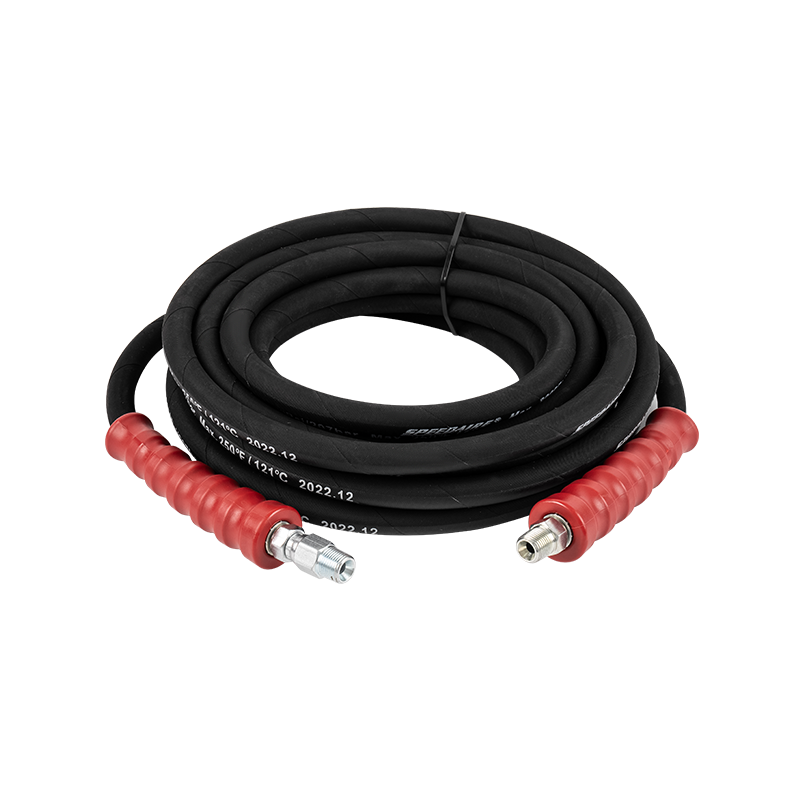
The manufacturing process is not identical for every hose type. A hydraulic hose and a pressure washer hose follow similar stages, but the materials and reinforcement differ significantly. For example, a pressure washer hose may use a single-layer braid of high-tensile yarn or thin steel wire, and the outer cover is often PVC or polyurethane for flexibility and grip.
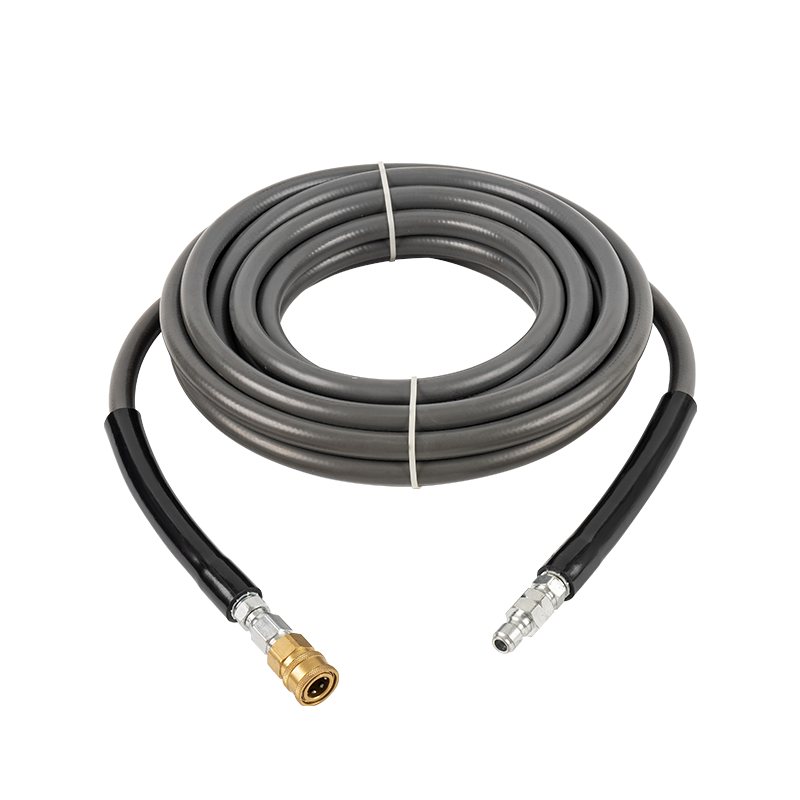
PE polyethylene pressure washer hoses are lighter and more kink-resistant than PVC, while PVC offers good chemical resistance and easy handling. Rubber hoses, on the other hand, remain the choice for high-temperature and high-pressure professional cleaning. If you are buying a hose for a 3,000 psi consumer unit, a PE or PVC hose can work well. But for a 6,000 psi industrial unit with heated water, you need a rubber hose with a higher temperature rating.
The manufacturing process also affects how the hose is finished. Some manufacturers offer hose assemblies, where the hose is cut, crimped with fittings, and tested as a complete unit. That can reduce your assembly errors and speed up installation.
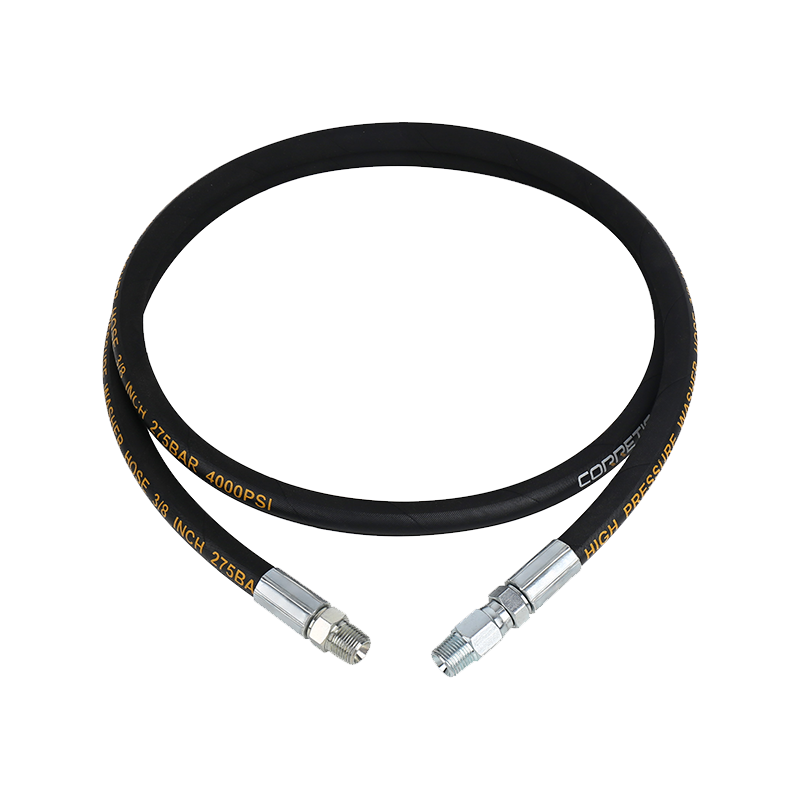
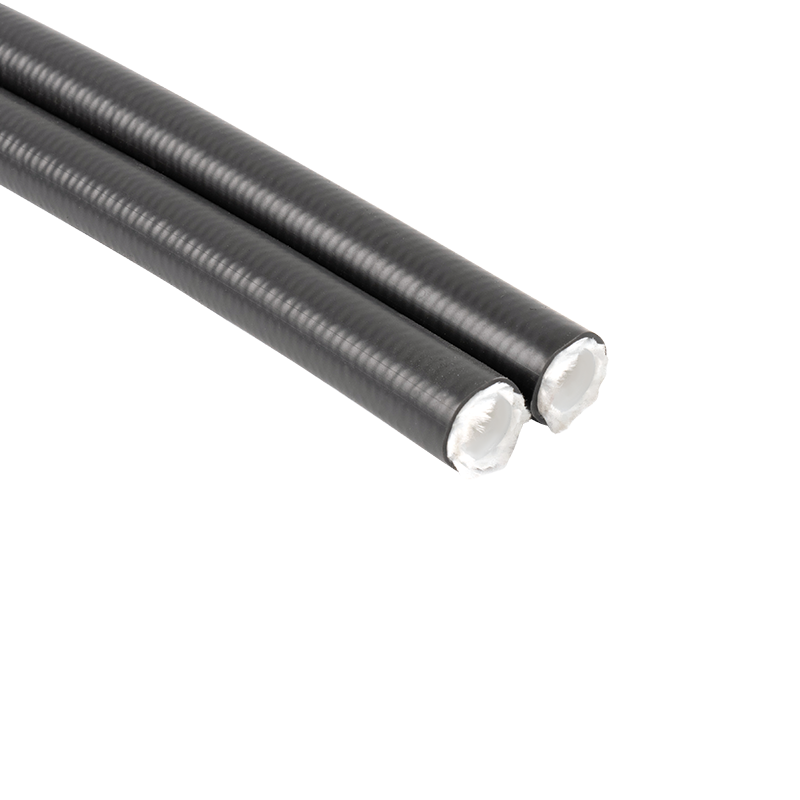 1/4" 3000 PSI PVC Flexible High Pressure Braided Washer HoseA lightweight and flexible PVC washer hose that withstands high pressure, ideal for efficient cleaning tasks in domestic or commercial settings.View Product →
When you review a hose manufacturer, look at the process rather than just the price. Ask how they control the wire tension during braiding and spiraling. Ask about the tolerance on wall thickness. Ask to see the quality control records for burst and impulse testing. Also check whether they use certified imported rubber or locally sourced materials; this affects consistency.
The production scale matters too. A manufacturer with a daily output of, say, 50,000 meters has proven process stability, but you still need to confirm their batch controls. And because hoses are often used in assemblies, you should ask if they can provide the fitting and total packaging. The ability to deliver a crimped, pressure-tested assembly from the same supplier reduces liability and simplifies your supply chain.
A final practical tip: request samples from the same production batch you plan to order. Test them in your actual equipment. A hose that looks perfect on a datasheet can still fail if the manufacturing process was not disciplined. The process, not the promise, is what determines performance.
The hose manufacturing process is a series of deliberate decisions. Good manufacturers control every stage, from rubber compounding and inner tube extrusion to wire braiding, vulcanization, and final testing. When you understand these stages, you can ask sharper questions and avoid the costly surprises that come from an unreliable hose.

 Wholesale High Pressure Power Washer Hose Manufacturers




 English
 Deutsch
 中文简体

a@uze.png "3000 PSI 1/4' Flexible PE Pressure Washer Hose")