Content
You are standing in a dusty corner of a maintenance yard, holding a hose that feels like it is fifty pounds heavier than it should be. The pressure washer is new, but the hose at the end of the wand was not part of the original kit. It kinks under load, and the water flow drops the moment you move the trigger. That is the moment you realize the difference between a bundle of rubber and a properly engineered high pressure hose water assembly.
Before you spend another dollar on a replacement, remember this: for high pressure water delivery, the hose is not a passive component. It controls how much pressure actually reaches the nozzle, how the machine responds to temperature changes, and whether the connection holds after months of exposure. The right choice is one that matches your working pressure, temperature range, and handleability—not simply the longest or the cheapest one.
Many buyers look only at the length. They assume a longer hose gives them more reach, but overlooked the fact that pressure drops over distance. A 50-foot hose with a 1/4-inch bore will have a noticeable pressure drop compared to a 25-foot hose with a 3/8-inch bore. The pump has to work harder to compensate, which shortens the life of the machine.
The internal diameter also matters for flow rate. A 3/8-inch hose moves roughly 60 percent more water than a 1/4-inch hose at the same pressure. That extra flow can mean the difference between a water spray that removes concrete debris and one that just wets the surface. The pressure rating is the absolute ceiling of the hose. If your machine can deliver 3500 psi, you should not select a 3000 psi hose. Over time, even a few passes above the rated pressure will weaken the reinforcement and create microscopic cracks.
The third specification to read is the temperature rating. High pressure does not automatically mean hot water. A boiler-fed washer can push water at 80°C or higher. Many standard hoses are rated for cold water only. If you use a cold water hose with hot water, the inner tube can soften, the outer cover can blister, and the fitting may slide off. That is why you see high temperature pressure washer hoses in the product catalog, they are built for dual conditions.
| Material | Pressure Range | Temperature Range | Flexibility | Typical Application |
|---|---|---|---|---|
| Rubber (reinforced) | Up to 6000 psi | -20°C to 100°C | Moderate | Industrial cleaning, high-pressure washers |
| PE | Up to 3000 psi | 0°C to 60°C | Excellent | Home and light commercial use |
| PVC | Up to 3000 psi | 0°C to 60°C | Good | General portable washers |
These are typical values, not guarantees. Always check the specific product label for operating limits. For instance, a 3000 psi washer matched with a 3000 psi hose is at the limit for the hose. A single spike above the rating can compromise the steel wire. If you run a small machine, you might be better off with a hose that has a higher rating than the machine's output, because that extra margin protects the system from transient pressure spikes.
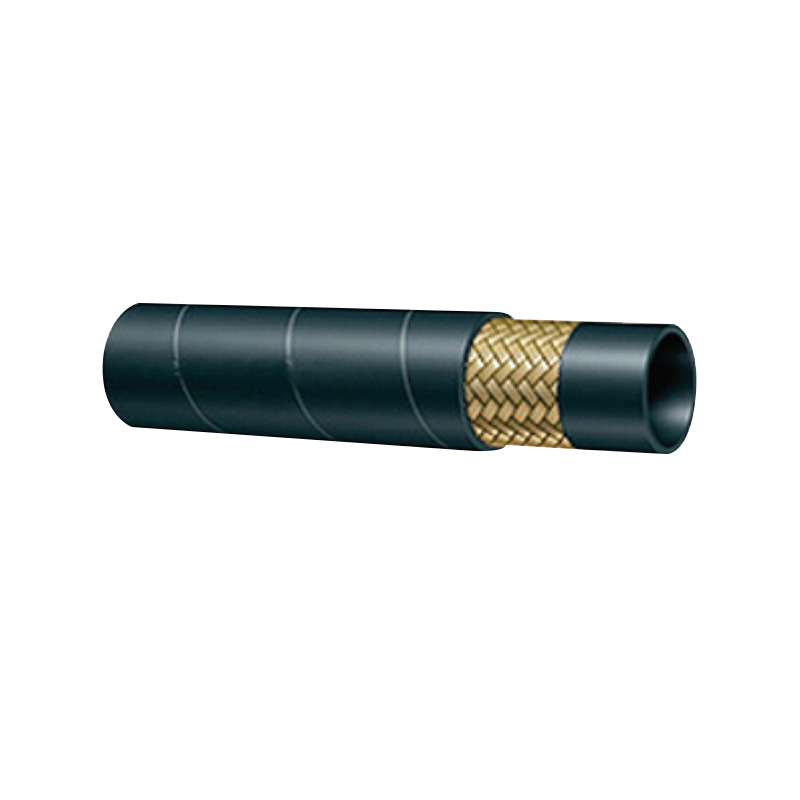
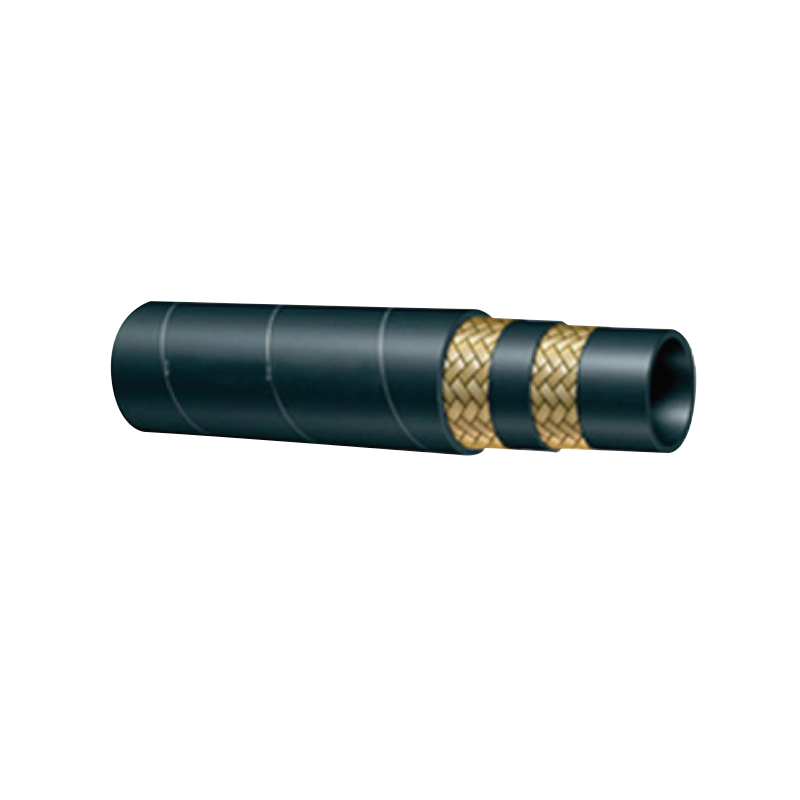
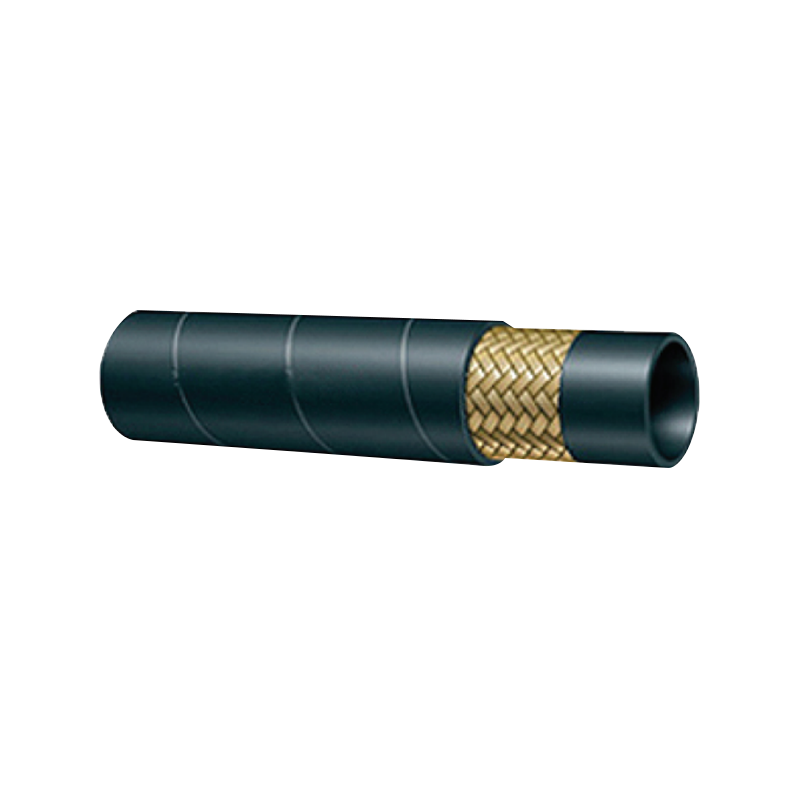
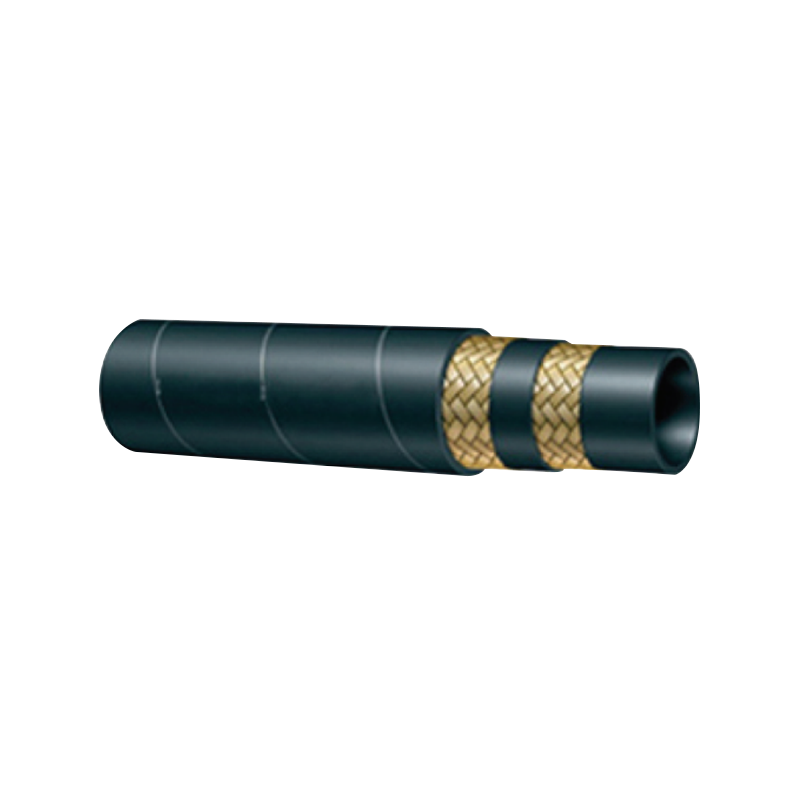
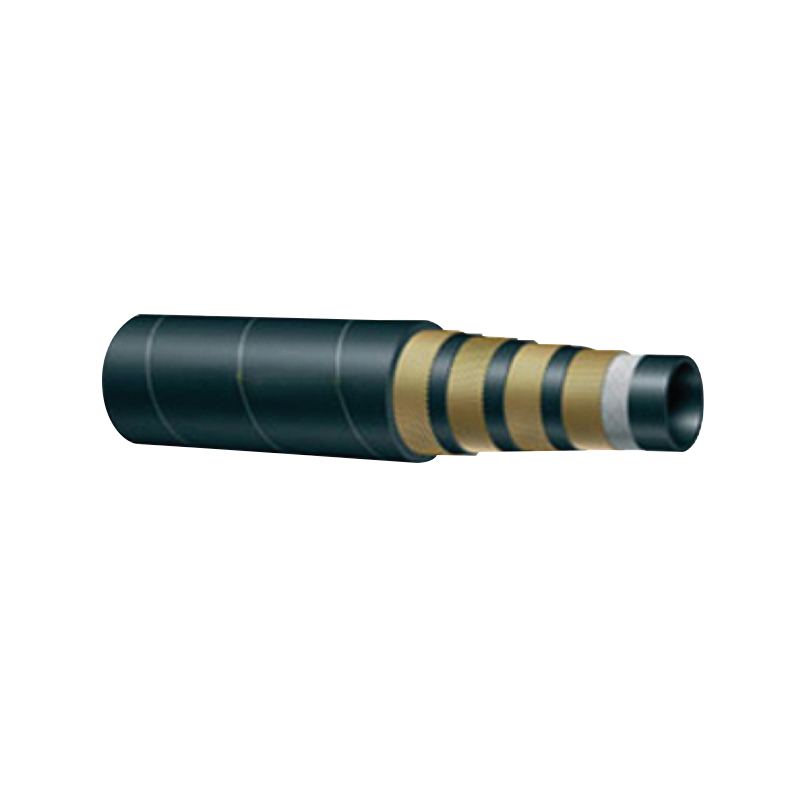
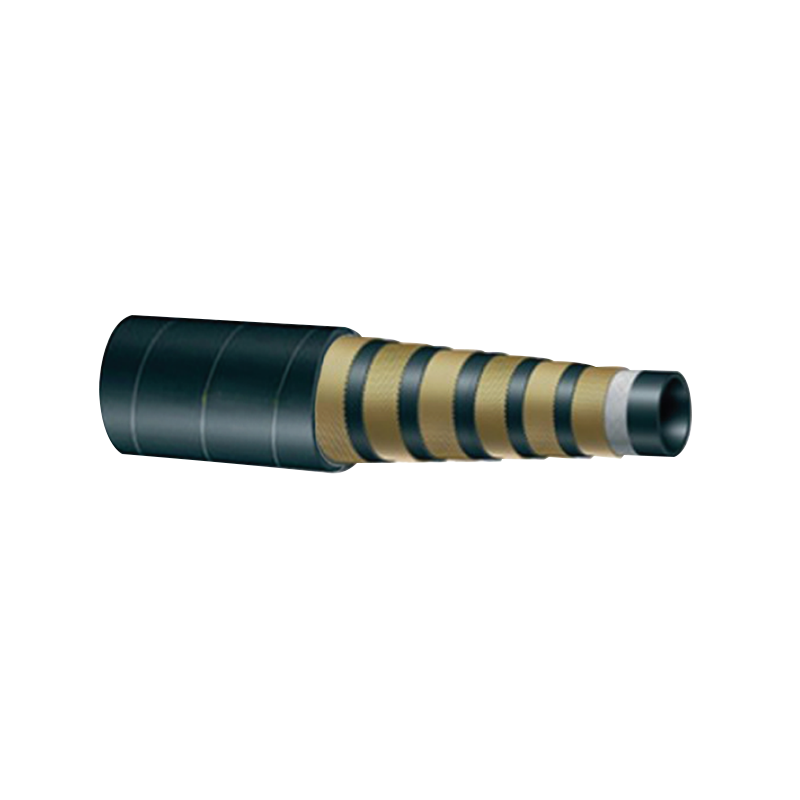
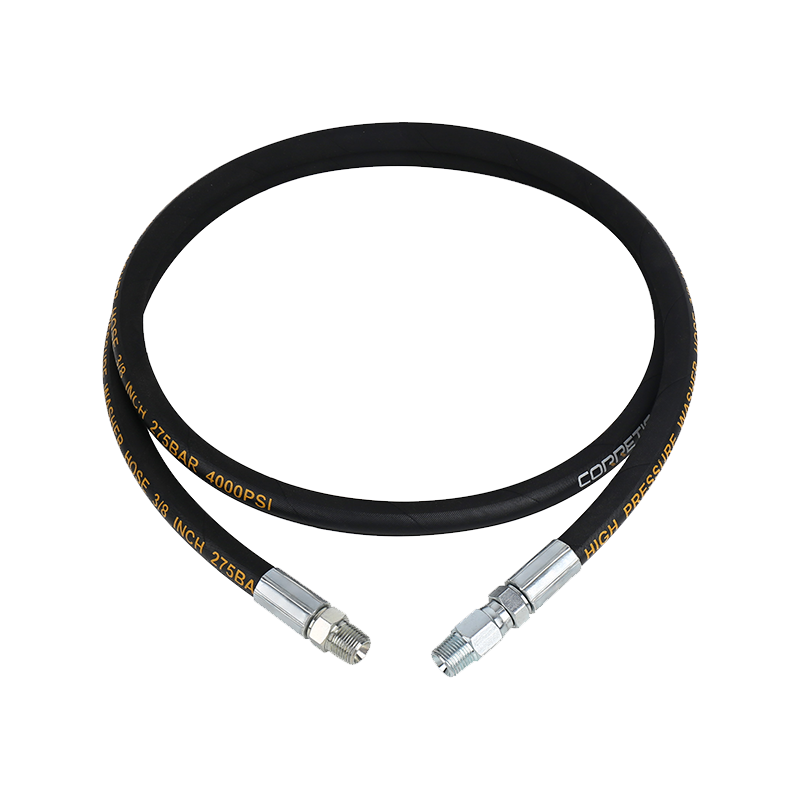
Rubber is the default material when you need to run high pressure water with serious temperature swings or wear. It has a strong reinforcement layer, typically steel wire braid, that keeps the hose from exploding under frequent spikes. If you are cleaning industrial equipment or using a hot water washer, a rubber hose with a 6000 psi rating is the safest choice. The outer cover on a premium rubber hose also resists abrasion when dragged over concrete.
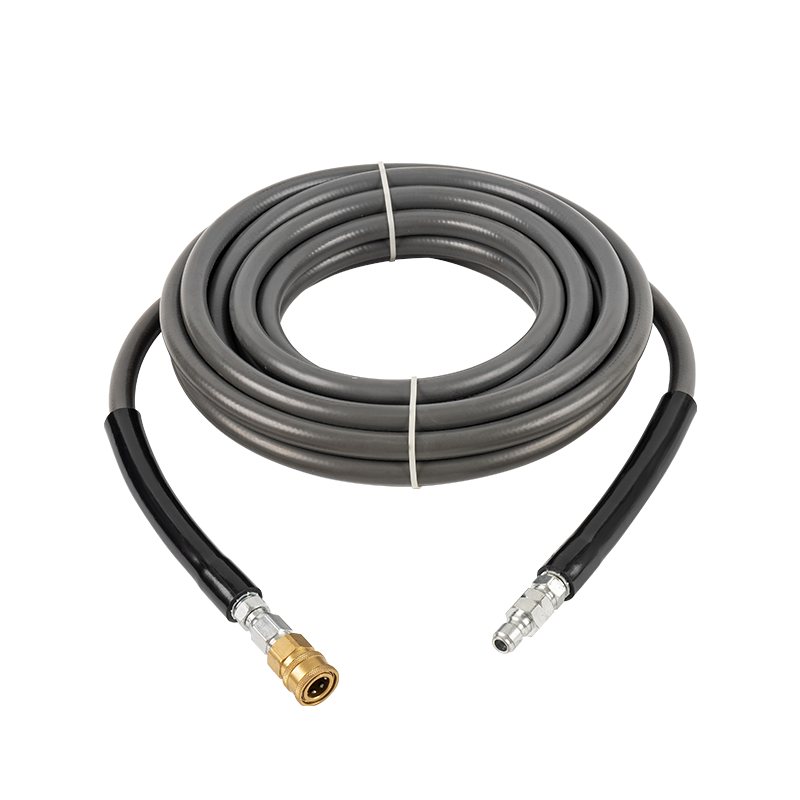 6000 PSI Gray Smooth Surface High Pressure Rubber HoseThis hose features a smooth gray cover and double steel wire braiding for high-pressure durability, making it a reliable choice for demanding cleaning tasks and long service life.View Product →
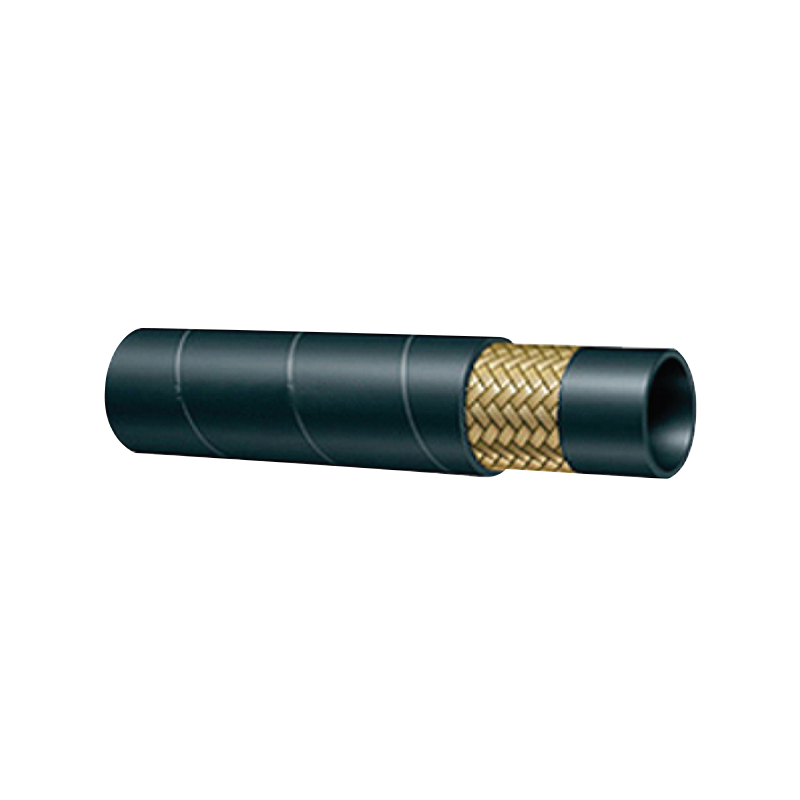
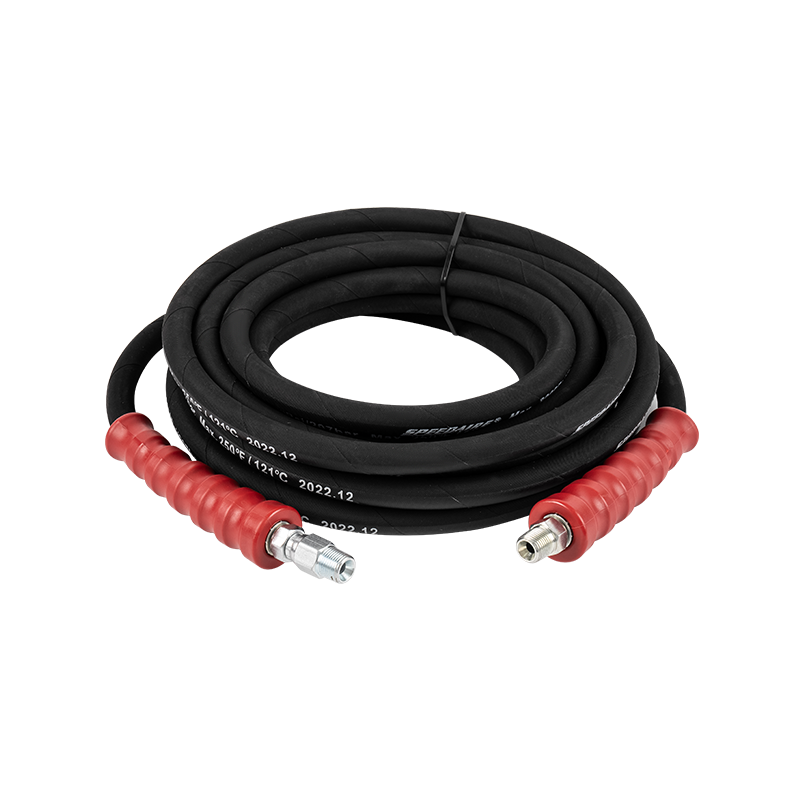
PE, or polyethylene, brings a combination of flexibility and light weight that makes it easy to drag around a driveway or a small workshop. At 3000 psi, it covers most home pressure washing tasks. The material also resists chemicals better than PVC in some cases, which matters if you are using detergents. PE hoses feel more like a garden hose than a heavy industrial product, but they are still rated for genuine cleaning work.
a@uze.png) 3000 PSI 1/4 Inch Flexible PE Pressure Washer HoseA lightweight polyethylene hose rated at 3000 PSI that handles detergents and abrasion well, providing a practical solution for routine home or light commercial pressure washing.View Product →
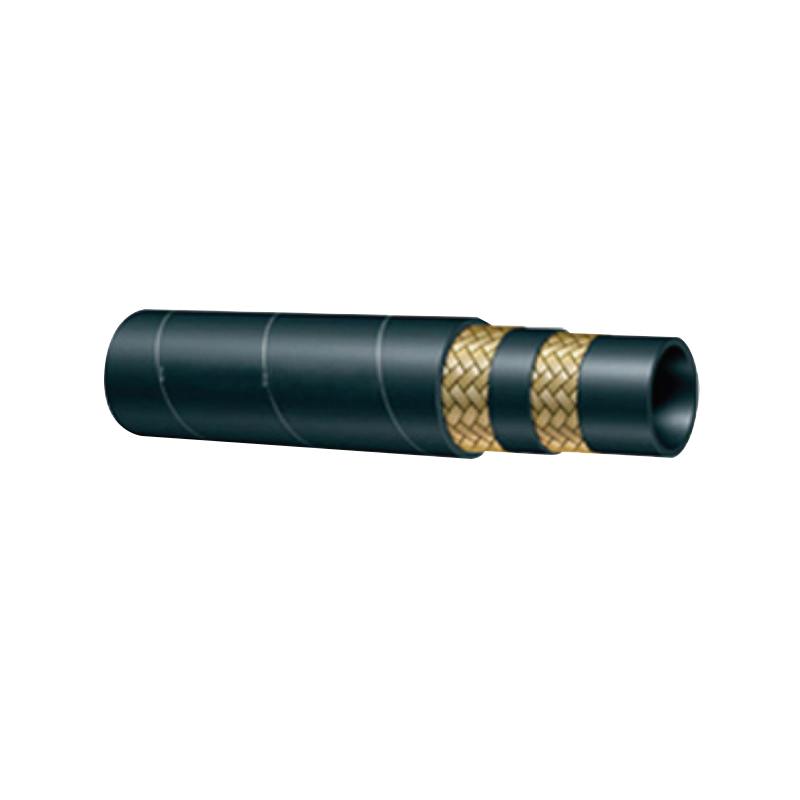
PVC pressure washer hoses are the workhorses of the affordable end of the market. They are durable enough for routine cleaning, easy to coil, and available in bright colors for visibility. A 1/4-inch PVC braided hose at 3000 psi is a good option if you are on a budget but still want reliable performance. The braid adds strength without making the hose extremely stiff.
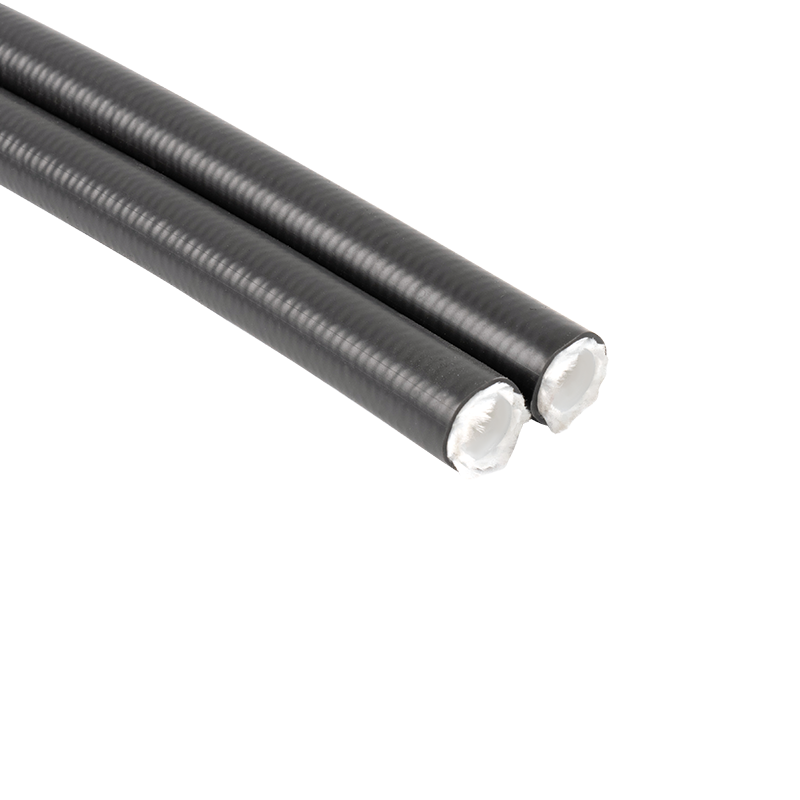 1/4 Inch 3000 PSI PVC Flexible High Pressure Braided Washer HoseA flexible PVC braided hose rated at 3000 PSI with a burst pressure of 8700 PSI, offering a cost-effective and durable option for medium-duty cleaning applications.View Product →
In many cases, the weakest point of a high pressure water system is the joint between the hose and the wand or the pump. A hose that is rated for 6000 psi can still leak at the fitting if the end is not properly secured. The end of the hose must be cut clean, the ferrule must be crimped with the correct tool, and the fitting must match the internal diameter exactly.
Two common methods are crimped fittings and thread fittings. Crimped fittings are used in factory-tested assemblies, and they provide a consistent seal. Thread fittings are more practical when you need to replace the nozzle or wand quickly. For complex designs, you can buy assemblies that come pre-crimped and ready to install. This eliminates most mistakes that happen on site. Understanding the methods for handling the end of a pressure cleaning hose will save you from downtime and expensive leaks.
Even the best hose can fail at the connection if the ferrule is compressed on the wrong part of the hose. If it is inserted too far, it can deform the inner tube and reduce water flow. If it is too far back, the hose can pull out when you pull the trigger. Factory-made cleaning pipe assemblies avoid this by testing each unit before packaging.
Hose-end connections come in many forms. Quick connect couplings let you change wands in seconds, but they have a small orifice that can restrict flow. Threaded connections are slower but can handle higher pressure and more frequent use. Choose the connection type based on how often you swap accessories and how many cycles the joint has to survive every day.
Check the hose before every heavy use. Run your hand along the length of the hose and feel for soft spots, which usually mean the reinforcing wire has broken inside. Cracks on the outer cover let water into the structure, causing the steel wire to rust and lose strength. Replace any hose that shows these signs. Do not patch it, do not tape it; high pressure water will find the weak place.
Also inspect the fittings. A loose fitting can cause a high-pressure jet of water to shoot out, which is both a waste and a safety hazard. Always use the correct wrench and never overtighten. When storing the hose, coil it loosely and keep it out of direct sunlight. Rubber will age faster if it sits in UV for months. If you want a deeper look at the risks, read how to ensure the safety of rubber hoses under high pressure conditions.
A regular maintenance schedule also includes checking the hose for leaks at the point where it meets the coupler. A thin line of water often shows that the ferrule has loosened. If you see a leak, stop the machine and re-torque the fitting before continuing.
The right high pressure hose water for your job is not the one with the longest guarantee or the loudest marketing claim. It is the one that matches your working pressure, your water temperature, and your need for comfort and portability. By checking the material type, the pressure rating, and the connection quality, you can avoid the frustration of a kinked hose or a leaky joint and get back to the work that matters. Remember that a high pressure hose is a safety component, not an accessory.

 Wholesale High Pressure Power Washer Hose Manufacturers




 English
 Deutsch
 中文简体


a@uze.png "3000 PSI 1/4' Flexible PE Pressure Washer Hose")